Showing posts with label Tu B'shvat. Show all posts

Sunday, January 5, 2014

Create a Personal Connection to Tu B'Shvat

Here's a question for you -- can you create a personal connection to Tu B'Shvat? Something that centers around trees? Perhaps you (and your students) are working on family trees? Even better, there's a surname in your family rooted to the word tree. For instance the last name Baum is a German Jewish name that literally means tree. Similarly, the name Nusbaum stands for nut tree and Baumgarten means a tree garden.

Why this question? It evolved from the fact that this year Tu B'Shvat has added meaning for me. With the recent birth and naming of our second grandchild I commented to my husband that "we now have two trees!"

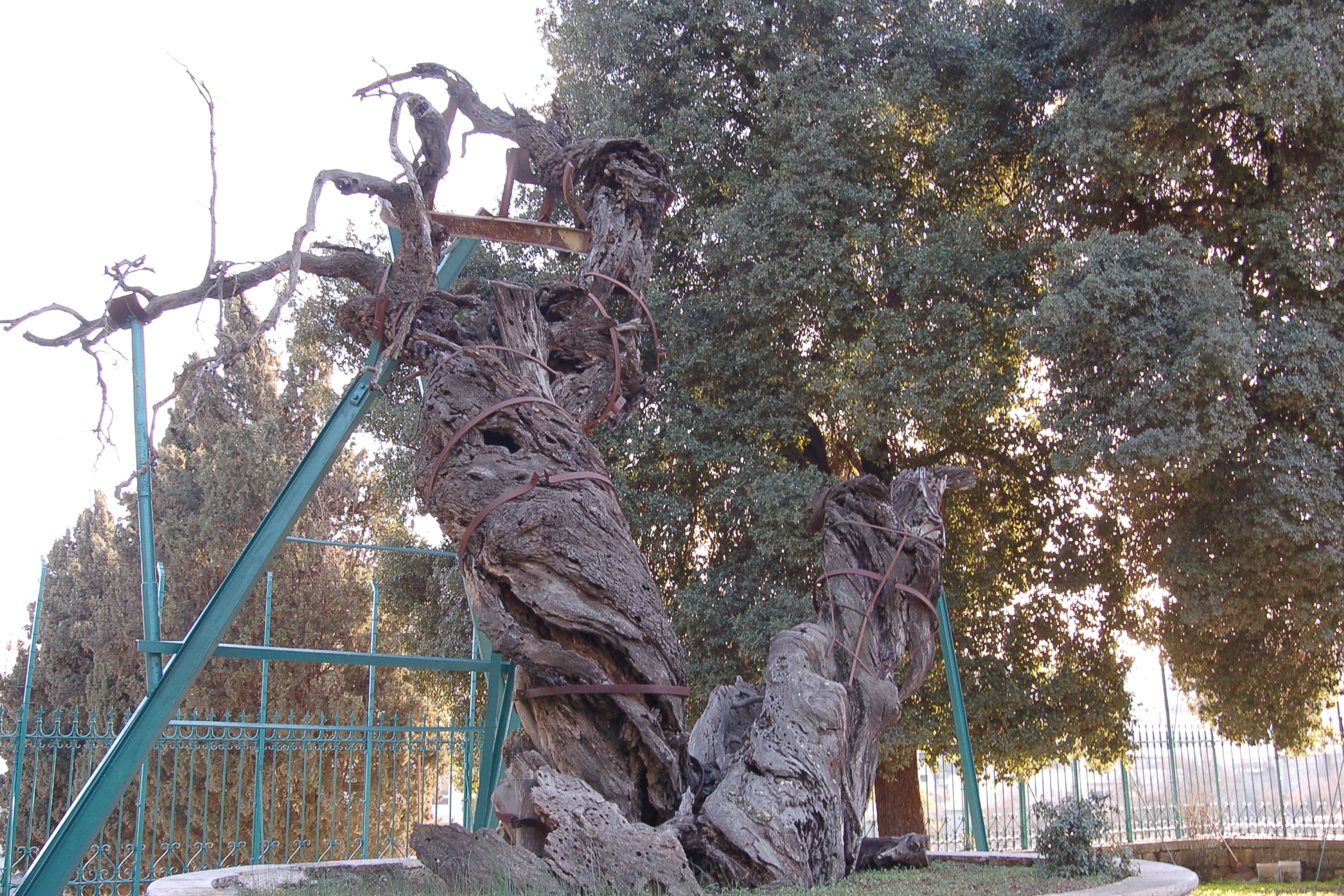
Our grandson Alon is named for the mighty oak tree rooted to many stories in the Bible -- starting with a tree named the Oak of Abraham, where legend has it Abraham hosted the three angels. The saga continues today, with the trunk of that strong, impressive tree still standing -- with some help.


Four weeks ago our granddaughter Elah made her entrance into the world. The name Elah is associated with oak, pistachio and terebinth trees. Sounds like a multiple choice test, but this tree 
has a formidable presence as well. After all, the Valley of Elah -- where David fought Goliath -- is named after it. 

While I'm writing this post I'm smiling to myself. Our two grandchildren's names unintentionally continue a family tradition of naming progeny after Biblical trees. It began with my parents naming me Tamar -- the palm tree under which Deborah sat when she carried out her duties as a judge, and the same tree providing us with palm leaves for Sukkot. 

Am I barking up the right tree with my original question -- can you create a personal connection to Tu B'Shvat? There may be a new Tu B'Shvat custom that you can create around it.


Thursday, December 19, 2013

A Reader-Friendly Hebrew Lesson for Tu B'Shvat

Every Monday afternoon I hold an English story hour for 8/9 year olds at the Kfar Saba Children's Library. Since none of the kids are native English speakers I've decided to do bi-lingual readings of favorite books that are not too childish in content for this age level. This past Monday I read The Giving Tree, or as they say in Hebrew, עץ הנדיב, followed by a discussion and a DIY story project about a tree.


With a ninth grade volunteer by my side, the book was read page-by-page, first in Hebrew then in English, bringing the "audience" up to speed with the meaning of each page's words. The children loved it, smiling and joining in. When I saw their reaction, it hit me that this could be a great tie-in lesson for Tu B'Shvat. You read in the reverse order that I did, and then take advantage of this Hebrew quizlet that relates to the book. With this quizlet in hand, I'm sure you'll branch out with numerous creative ideas.

Am I barking up the right tree? I hope so. While you probably have The Giving Tree in your library, the Hebrew edition can be easily purchased through Amazon.

Tu B'shvat is less than a month away. Hope this helps you with your lesson plans.


Tuesday, January 15, 2013

From Planting Trees on Tu B'Shvat in Israel to a Bible Tree Quiz

While listening to the radio yesterday, I heard about a tree contest being run for Israelis by the Jewish National Fund. Citizens are asked to send in a photo of their favorite tree in Israel along with a detailed history. Naturally, the competition is being held in honor of Tu B'Shvat and I'm wondering if it will lead up to a traditional Tu B'Shvat tree planting event as well.

The announcement got me thinking about your running a Bible/Israel tree quiz for your family/friends/students. I've done some of the leg work to get you started, so here we go.


1. Two different trees stood in the Garden of Eden. Name them.

2. Trekking through the desert, the Children of Israel reached an oasis in Elim where there were water springs and trees. What kind of trees?

3. Among the laws handed down to the Children of Israel, the law of Bal Tashchit deals with preserving trees in times of war. What kind of trees?

4. Which of the seven species grow on trees?

5. What type of trees did King Solomon buy from the King of Tyre?

Now it's your turn. To help you branch out and develop more questions, read this article on some of modern-day Israel's ancient trees.

Enjoy the mental climb!


Answers
1. Tree of Life and Tree of Knowledge
2. Palm trees
3. Fruit bearing trees
4. Olives, Pomegranates, Dates & Figs. Grapes grow on vines.
5. Cedar trees

Photo Credit

Sunday, December 30, 2012

A Tall Tree Tale for Tu B'Shvat from Choni Hama’agel

Is there a Jewish equivalent to Rip Van Winkle? Yes and his name is Choni Hama'agal. A wise man who lived in the 1st Century BCE, Choni was famous for drawing a circle -- ma'agal --  in the ground during a terrible drought and vowing that he wouldn't step out of it until God answered his prayer for rain -- which is how Choni acquired his sur-nickname.

How does Choni parallel Rip? I certainly don't want to rain on his parade but another Choni legend, which some would dub a sleeper, puts the snooze into Choni. Actually it's a tall tree tale that is used as an explanation of why we eat carob on Tu B'Shvat.

In this fable Choni travels on a road when suddenly he sees a man planting a carob tree."How long will it take this tree to bear fruit?" he asks. "Seventy years," answers the man. Taken aback, Choni asks: "do you expect to live that long?" The man smiles. "Of course not. I'm planting this tree for my children and children's children, the same way my ancestors planted a carob tree for me."

Satisfied with the answer and hungry, Choni sits down right then and there to eat. Satiated from the food, he gets drowsy and -- you guessed it, he goes to sleep for 70 years. No one notices his state of slumber because a rock formation grows around him, hiding him from view. Sure enough when he wakes up he sees a familiar looking man picking carobs off the tree. "You mean you managed to live long enough to pick the fruit?" asks Choni. The man laughs, answering "I am the grandson of the person who planted this tree."

What's the Tu B'Shvat connection? Fruit-bearing trees are a sign of continuity. The New Year of Trees, Tu B'Shvat, celebrates our continual attachment to the land. That's wisdom worth handing down to your next generation(s).

Photo credit

Sunday, January 29, 2012

Many Generations Back Jews Living in Jerusalem's Old City Gave Each Other Mishloach Manot on Tu B'Shvat

One of the things I love about writing this blog is discovering how customs normally associated with one holiday have been adapted by different Jewish communities to another. Take the Purim practice of giving Mishloach Manot.  Who would think that this custom would apply to Tu B'Shvat? A seventh generation Israeli whose forebears originally lived in Jerusalem's Old City reports that way back when in the Jewish Quarter, people sent trays filled with fruits, nuts and seeds to one another.

I can only give an educated guess as to why. There has been a continual Jewish presence in Jerusalem's Jewish Quarter since the 8th Century BCE. The Tu B'Shvat Seder dates (forgive the pun) back to the 17th century. The term Mishloach Manot literally means "sending portions" -- ensuring that everyone has enough food for the feast. Let's connect the dots. Seven generations back leads us to somewhere in the mid-19th century. Jews living in Jerusalem back then were not exactly wealthy. In all probability, they observed the ritual of a Tu B'Shvat Seder. But what if they didn't have enough money for fruits and seeds? Aha! Mishloach Manot, of course.

As I said, it's only a hunch, but there's no guesswork as to what fruits are eaten on Tu B'Shvat. All you have to do is bite into 5 of the 7 Species: grapes, figs, pomegranates, olives and dates are all native to Israel. I say let's expand the list and teach our children about other fruits Israel is famous for (I know that Zvuvi has provided you with the latest innovation).

Let's start with prickly pears, commonly known in Israel as the Sabra fruit. Yes, it's the best way to explain the Israeli personality -- tough and thorny on the outside, sweet and soft on the inside. Please don't forget lovable and loyal.


Need another juicy Israeli fruit tidbit? Try our oranges.
I know that oranges and Florida are synonymous to you, but Israel put oranges on the European market map with its famous Jaffa brand. When Spain and Portugal started to heat up the competition, we branched out by developing unusual citrus varieties.

Finally, how about a new Pitaya hybrid Made in Israel?


Have I helped you make seder -- order -- about fruits for Tu B'Shvat? I hope so. Happy New Tree Year. Enjoy all the fruit that they bear.


Dried Fruit & Nuts Photo Credit
Prickly Pear Photo Credit
Oranges Photo Credit
Pitaya Photo Credit

Sunday, January 15, 2012

Iraqi Jews Connect Weddings with Tu B'shvat

Once upon a time Jews living in the Land of Israel planted trees for babies born the previous year. Cedar trees were earmarked for boys, ensuring the infants develop into  tall, upright citizens. Girls on the other hand were assigned cyprus trees because of their grace and fragrance. On wedding days these two trees intertwined, with branches from both used to make the huppah, wedding canopy -- a theme continued on modern-day huppot.

But what about the actual connection between Tu B'Shvat, trees and weddings? Ask Iraqi Jews who call this holiday Chag Livluv HaEtzim -- Holiday of Tree Blossoming. One of their special customs is taking the bachelorettes of their community to the forest and assigning a tree to each as a "husband." One month later they return to the forest, checking which trees have begun to blossom. These symbols of budding romances mark upcoming marriages during the coming year.

You can say this custom is quaint or sweet, but let's put it in today's ecological terms. After all, Tu B'Shvat is the original Arbor Day and by Iraqi Jewish lights one could say that in order to protect the environment, they wisely husband their energy.


Photo Credit