Sunday, May 22, 2011

Libyan and Moroccan Jews Spray Each Other with Water on Shavuot

A water fight on Shavuot? That's what Jewish children and adults alike did in Libya and Morocco. The Talmud says water symbolizes the Torah. Both are lifelines, both quench a thirst. In the case of the Torah, it quenches our thirst for the spiritual. Libyan and Moroccan Jews took the comparison of water and Torah literally by spraying or pouring water over each other. They believed that anyone who has water poured over him/her during Shavuot would not be sick for an entire year. No wonder parents helped their children out with the water fun, pouring buckets over passers-by, or simply spraying them with water guns. Libyan Jews, on the other hand, timed the water fun with the reading of the Book of Ruth, followed by piyutim – Jewish liturgical poems. Once the reader chanted the verse dealing with good luck – “B'simana tava u'b'mazalayah” – a full water pitcher would be turned upside down over his head, soaking him from head to toe, assuring him he would have a successful year.

So, what do you think? A water fight as a way to introduce Shavuot? Quit treading water. Take the plunge.


Sunday, May 8, 2011

On Shavuot Lisbon's Jews Read a Special Marriage Contract


We're all familiar with the Ketuba – marriage contract – that is read out loud during a wedding ceremony. But a specific Ketuba read only on Shavuot? Ask the Jews of Lisbon, Portugal, and they'll explain that because Shavuot signifies the unique bond between God and the Jewish people, they have composed a special marriage contract sung out loud by the Chazan – cantor. Before reading the Torah portion, the Shavuot Ketuba is removed from a long velvet covered tube. Two children stand on the Bima, holding the Ketuba open for the Chazan to read. At the conclusion, it is rolled up and inserted in the tube, to be read again the following year on Shavuot.

This is one of the most charming holiday customs that I've found over the past two years. What a wonderful way to illustrate our commitment to Zman Matan Torahteinu. We are wedded to the Jewish way of life. It's what makes us unique among all nations. I do not have the precise wording of the Lisbon Shavuot Ketuba, but the very idea makes for a fun classroom lesson where you and your students write your own Shavuot Ketuba.
I'll be back with more Shavuot customs.
Tami

Sunday, April 10, 2011

For Tunisian Jews it's Back to Basics on Seder Night


I'm back to Tunisia, this week for a Seder custom that is truly back to basics. Say the word Seder and most of us immediately associate it with a beautifully turned out table, including masterful pieces of Judaica – the seder plate, Elijah's cup, the Seder leader's Kiddush cup, a finely embroidered afikomen cover, not to mention beautiful china and cutlery.

Say the word Seder to a Jew of Tunisian descent and you get a description of pure home-made fun. To begin with, there is no table. Everyone sits on the floor. As my good friend's granddaughter explained: “we sit on thin mattresses laid out on the floor in the shape of a square.” I must have grimaced at the thought of getting up after sitting on the floor for so long, because she quickly added: “we make sure to have sofas nearby for older family members.” A seder plate? Think again. Tunisians use a large reed basket in which they place eggs (according to the number of children in the family), a leg of lamb for the shank bone, charoset, romaine lettuce for bitter herbs and shmura matzot wrapped in a large cloth napkin. Once the contents are neatly packed inside, the basket is covered with a large, beautiful cloth.


I am certain that a classroom model seder like this would be lots of fun. There's no doubt in my mind that the reed basket symbolizes baby Moses floating down the Nile – so make sure you point that out as well. Combine this with the Passover play custom that so many Sephardic Jews have adopted. It's about as playful as you can get. You may remember that I brought it up when I first started this blog over two years ago. A member of the family discreetly leaves the table before the seder begins, dresses up to look like one of the Children of Israel (make sure to include a walking stick) and sneaks out of the house. Just as the reading of the Haggadah is about to begin s/he knocks on the front door and the play begins. The head of the house gets up, saying: “Who could that be?” Opening the door, he sees a stranger. “Who are you?” he asks. “I am one of the Children of Israel.” “Where are you coming from?” continues the Seder leader. “From Egypt,” answers the stranger. “But how can that be? Aren't you a slave?” asks the Seder leader. “I was,” answers the stranger, continuing with a proud smile. “Now I am a free man.” “Where are you going?” continues the Seder leader. “To Jerusalem,” answers the stranger. “Then you must join us,” insists the Seder leader, “and tell us what it was like being a slave in Egypt.”


Sitting on the floor to eat a meal seems like a logical part of a slave's life in ancient Egypt. Let everyone take a turn and describe the slavery experience. You'll find that your students have some pretty keen insights.

Chag Sameach...Tami

Monday, March 28, 2011

For Libyan and Tunisian Jews Rosh Chodesh Nissan Commemorates the Start of a New Life


There’s nothing like connecting current events to our rich Jewish heritage. All of us are waiting to see how the Arab Spring will play out. Regardless of the outcome one thing is certain – the yearning for freedom marks the start of a new awakening. And isn’t that precisely what Rosh Chodesh Nissan and Passover are all about?


According to the Book of Exodus (12:2) the month of Nissan is the first month of the year. Certainly it is the month when Moses and the Children of Israel sprang into action, going from a daring escape to freedom, to building the mishkan – a portable synagogue for housing Hashem – in the desert. The men were the construction workers and the women recyclers, donating their gold jewelry to the building process. To commemorate this process Libyan Jews put together a sweet mixture called a “bsisa”. A concoction of roasted grain seeds, almonds, nuts and raisins, they also add pieces of gold jewelry and oil, knead it together with a key to the house and recite a blessing of thanks. This ceremony, that many Jews of Libyan origin continue today, was created to give the sense of a new beginning.


From Libya we go to Tunisia where Jews marked Rosh Chodesh Nissan by placing a single candle wick into a cup of oil, toss a coin into the cup and say a blessing for the new year.


While only a handful of Jews remain in Tunisia and none are left in Libya, these countries are part of the Jewish Mosaic as well as today’s headlines. Rosh Chodesh Nissan is neatly tucked into that mosaic as well. This year it falls on Tuesday, April 5th. Make this Rosh Chodesh Nissan an opportunity to combine your Social Studies Current Events lesson plan with your Jewish studies curriculum – and connect the dots.

Sunday, March 13, 2011

Dutch and Italian Jews Share a Haman’s Ear Custom


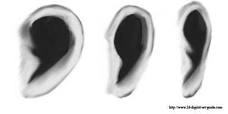
My friend Ida hails from Holland. When I told her about my research and blog dealing with Jewish holiday customs she eagerly added her own Dutch treat for Purim. “You know,” she said, “I never quite understood why Hamentashen stand for Haman’s ears. You have to go to Holland to see what a Haman’s ear really looks like.” Ida then proceeded to describe a family baking session consisting of dough dripped into a deep pan of hot, bubbling oil, carefully shaped to look like an ear. Once golden brown, it was removed, drained from oil and then sprinkled with confectioner’s sugar. Placed on a cake tray, the final display showed numerous ear shapes to choose from. “After all,” smiled Ida, “we all have different shaped ears.”

Being a pretty thorough researcher herself, Ida decided to Google the recipe. Here’s what she came up with. As you can see, the Italians share this custom as well. It’s more than a tradition. It’s an earful.
Hearty appetite and Happy Purim.

Sunday, February 27, 2011

The Jews of Alsace France have a Unique Way of Remembering Haman


Skip the Hamantashen. The Jews of Alsace France prefer to eat Hanukkah style doughnuts on Purim, and they have created their own gallows humor to remember Haman. They don’t tell Haman to hang on to his hat, but in their own way they hang him out to dry – literally. You’ve got it. They eat smoked beef that they have hung out to dry and put it in their pea soup or steamed cabbage, making it an important course in their Purim feast. It’s a fun idea and translates well if you want to turn your classroom into a Purim Deli. I can envision hanging salamis “dressed up” as Haman and his sons. It’s a delicious idea for a holiday that’s full of fun.
Enjoy!

Sunday, February 20, 2011

Portuguese Jews Reach Out to the Poor on Purim


With a month to go, we’re all in the throes of getting ready for Purim – the happiest holiday on the Jewish calendar. But there’s a serious side to Purim that kids should be aware of as well, and that’s Matanot Le’Evyonim – Gifts for the Poor. Portuguese Jews make sure to bring this message home. Once the Megillah is read on Purim morning the synagogue youth leader takes youngsters on a door-to-door campaign, collecting money in velvet bags that are distributed to the less fortunate in the community. What’s more, on Purim day poor people are not ashamed to knock on the doors of their fellow Jews, asking for help. Every household has its own pile of coins ready for distribution.

Helping the underprivileged is an important Purim lesson. In between learning about the story of Esther, how about organizing a Purim Costume Drive? Ask your students to bring in last year’s costume as a donation to less fortunate kids who don’t have the means for creating a fancy getup.

What about volunteering at a local soup kitchen the day before or after your Purim festivities?
I am sure you can come up with even better ways to get the message across that it is important to reach out to the needy.

Food for thought as you start your Purim lessons.
Speaking of food for thought – I’ll be back over the next few weeks with some fun Purim food customs.
Tami