Showing posts with label Judaism holidays. Show all posts

Sunday, April 6, 2014

A Passover Custom That Was All Greek To Me Until....

I'm back in Israel after an eye-opening Jewish history visit in Greece.

Last week my blog dealt with the Jews of Thessaloniki and their Passover customs. This post will focus on the Romaniote Jews of Ioannina -- a city in north-western Greece.


No, I didn't travel to Ioannina. I found out about this dwindling Jewish community when I visited the Jewish Museum of Greece located in Athens. Since my focus here is on holiday customs, I won't go into the background of this unusual community, except to say that they are the original Greek Jews with a history dating back over 2,000 years. Their story is fascinating, so please click on the links above to read all about them.

Now, on the Romaniote Seder which isn't even called a Seder. Here's the interesting custom. For them, the Passover ceremony around the table is called Hova -- חובה -- which in Hebrew means obligation. The name Hova immediately gives seder/סדר -- order -- to the evening. It reminds us that we must fulfill the commandment to "tell your children" about the Exodus from Egypt. Consequently, as a reinforcement of this reminder, the Romaniote Hova begins by everyone placing their hands on the table while reciting the phrase  זה השולחן אשר לפני השם -- This is the table before God.

To be honest, I heard about the hand custom years ago, but it was all Greek to me since my Greek-Israeli friend shrugged it off as something Greek Jews do without providing a reason as to why. I have to hand it to the museum staff member who gave me the explanation, making sure I would include it in my blog. I even purchased a copy of the Romaniote Hagaddah.
 

So, let's get on with our Hova. Make your Seder enlightening and enjoyable. To remind you how to keep everyone involved -- children and adults alike -- have a look at one of my first posts and have a חג שמח!


Hands Photo Credit

Sunday, March 30, 2014

Passover Customs Direct from Thessaloniki

Greetings from Thessaloniki -- also known as Salonica, once home to one of the most thriving Jewish communities in the world.

It's wonderful being here in this historic city that many Jews called home for two thousand years. When did they exactly arrive? Good question. A Jewish presence in Greece is mentioned in the book of Isaiah (66:19). Some researchers claim that Jews lived in Thessaloniki when the city was first established in 315 BC. Others claim that Jews from Alexandria, Egypt settled in the city in 140 BC.  Regardless of the exact date, the most significant expansion of the community came during the Spanish Inquisition when 15-20,000 Jews called Sephardim were expelled in 1492 and found a safe haven in Thessaloniki. With 32 different synagogue communities, the Jews flourished and became an essential part of the city's economy, turning it into a first rate commercial center.

While the community's history is both fascinating and tragic, the holiday customs it developed are equally interesting and still practiced by the remaining 1,000 Jews. I visited the Jewish Museum of Thessaloniki and met with its director, Erika Perahia Zemour. She told me about a few Passover customs that I want to share with you.
                                                           
 Have a look at the Haggadah in these two pictures.
 Erika pointed out that it is written in 3 languages: Greek, Spanish Hebrew -- better known as Ladino -- and Hebrew. Family members take turns reading from the Haggadah and do so in the language they feel most comfortable in. So, the children read their portions in Greek. The grandparents feel much more comfortable with Ladino, and the parents will either read the Hebrew or Greek text.

Next, take a look at the pan behind the Haggadah. Don't mistake it for a Seder plate.  It's a special frying pan for making Passover style burmelos. If you've read my book Hannukah Around the World, then you're already familiar with this fried doughnut made by Turkish Jews and other Sephardim for Hanukkah. Clearly, this is a holiday favorite for the Jews of Thessaloniki who have decided to give it a Passover twist by using ground matzah instead of flour. Erika even gave me the recipe:
Ingredients
1 cup ground matzah (count how many pieces of matzah you use for a cup)
water
eggs
oil
honey
Preparation
Add enough water to the ground matzah to make dough. Add one egg per slice of matzah that you've ground and mix into a smooth dough. Drop a spoonful of dough into hot oil and fry on both sides. Remove and pat dry.  Once the burmelos have cooled pour honey on top and serve.

Speaking of recipes -- Erika also shared a recipe for a unique matzah egg drop soup. I'm going to save it for my next blog post.
Bye for now from Thessaloniki....or as they say in Greek: αντίο.

Sunday, March 23, 2014

Cochin Jews Put a Plague, or 10, on Pharaoh's House

Here's a DIY 10 Plagues seder project that you can adapt from a custom practiced by the Jews of Cochin, India.

In addition to placing Elijah's cup in the center of the Seder table, Cochin Jews place a Pharaoh's Cup filled with wine near the leader of the seder. Comes the section in the Hagaddah dealing with the Ten Plagues, this cup gets prime time exposure. As he calls out the name of every plague the seder leader dips his finger in Pharaoh's cup then drops the wine in a special plate. When he finishes saying all the plagues, he washes his hands.

Now for the DIY in this age of ready-made seder gimmicks.

Sketch a picture of Pharaoh. Older children can do it on their own. Younger children will have fun using the sketch as a coloring page.

That's right, add color. Ancient Egyptians liked color and makeup. Turn Pharaoh into a colorful character -- one that looks like this


Make sure the images can be taped to the front of a juice glass. Make as many as you like -- only one for the seder leader, or a Pharaoh cup for each participant and watch Pharaoh and his kingdom "drop out".


Pharaoh sketch credit
Colorful Pharaoh photo credit

Sunday, March 16, 2014

A Tunisian Passover Custom Ties in with This Year's Oscars

Two hundred+ years a slave(s). That's how long it took the Children of Israel to be free of their bondage.

To remember this fact, Tunisian Jews refined the Moroccan custom of holding the Seder plate on top of each person's head. Instead, they touch the head of each person with the seder plate in order to remind him/her of the unimaginable oppression and hardship slavery entails.

How does this custom tie in with this year's Oscar winner 12 Years A Slave? During the American Civil War a song was composed in 1862 called "Oh! Let My People Go." Its purpose was to serve as the anthem for Contraband -- escaped slaves who joined the Union army. At the same time church and church services served as a center for hope and solace for the slaves, who often used Gospel songs as a means of expression. The Biblical story revolving around the enslavement of the Children of Israel, and their savior Moses helped provide a feeling of faith and trust in the future. As a result "Oh! Let My People Go" evolved into one of the most popular Spirituals sung by the slaves. It's name was changed to "Go Down Moses" and it is still widely sung today by Gospel choirs.

So here's an idea for reprocessing the Tunisian custom. As the leader of the Seder touches the head of each person with the Seder plate, how about everyone singing the first stanza of "Go Down Moses."

  1. When Israel was in Egypt’s land,
    Let My people go!
    Oppressed so hard they could not stand,
    Let My people go!
    • Refrain:
      Go down, Moses,
      Way down in Egypt’s land;
      Tell old Pharaoh
      To let My people go!


Photo Credit


Sunday, March 9, 2014

Hungarian Jews Hold a Purim Feast that Resembles the American Thanksgiving Meal


Remember the jokes we make at Thanksgiving about why we eat turkey? The typical answer is because we are giving thanks to god, which in Hebrew is 'הודו לה and the word הודו also means turkey.

It seems that for Purim, Hungarian Jews have the same sense of humor. At their Seudat Purim -- the Purim Feast -- they too serve turkey for the main course.  Why? Because Ahasuerus ruled from הודו עד כוש -- which means from India to Ethiopia.

You've got it.  The Hebrew word for India is הודו. And yes, American Indians play a major role in the Thanksgiving holiday but I'm not going there. This is a different India, part of a vast kingdom. Do you know that Ahasuerus ruled over 127 provinces?! Who was King Ahasuerus? The Talmud and the Biblical commentator Rashi have different takes on this question.

Here's another question for you to explore. Feasting plays a major role in the Book of Esther.  How many feasts were held and how long was each one?

Can you think of your own twist for a Purim feast custom? While pondering the answer to this question have a look at these Purim Feast menus.

חג שמח


Turkey image credit

Sunday, February 23, 2014

A Bukharan Purim Custom for the Wintry Weather

Like you, I'm hoping that the extreme weather in the United States will make a turn around, but just in case you experience another snow storm, think about adopting this Bukharan Purim custom

Bukhara is the perfect combination of exotica and history. Located on the ancient Silk Road, this Central Asian city and surrounding region was once home to a vibrant Jewish community.

In fact, this is not the first time I've taken you to Bukhara. Last year I introduced you to the Bukharan Jewish custom of a Passover Seder overture. Sure enough, now I've discovered that this colorful community had a creative Purim twist as well.

There is always snow on the ground in Bukhara when Purim rolls around. While very few Jews remain in Bukhara and its surrounding areas, when this vibrant community was at its peak, they made the most of the snow by sculpting snowHamans like the one in this picture.

I know you're sick of the snow, but just in case you get another dumping, now you can creatively put it to use.  I've found 10 snow sculpting tips you might want to follow. If you want to go all the way, think about this: carve Haman's name into his torso, light a candle or two right next to him, watch him melt away and presto! You have a Purim variation of the Wicked Witch of the West.


Snow-Haman Photo Credit

Sunday, February 9, 2014

A Different Purim Twist from Morocco: Haman's Eyes

Haman must have been a funny looking fellow. Ears that looked like triangles, and (now I've discovered) -- eye sockets that looked like unshelled hard boiled eggs.

You guessed it. Two hard boiled eggs in their shells are the key for baking a Moroccan Purim bread called Haman's Eyes. It can be a bread adorned with almonds, like the one in this picture, used as part of the Mishloach Manot.

Or...it could resemble this!


A fun class or home activity? You bet. Just follow this recipe and give that devil everything he deserves!


Photo credit
Haman's Eyes Photo Credit

Thursday, December 19, 2013

A Reader-Friendly Hebrew Lesson for Tu B'Shvat

Every Monday afternoon I hold an English story hour for 8/9 year olds at the Kfar Saba Children's Library. Since none of the kids are native English speakers I've decided to do bi-lingual readings of favorite books that are not too childish in content for this age level. This past Monday I read The Giving Tree, or as they say in Hebrew, עץ הנדיב, followed by a discussion and a DIY story project about a tree.


With a ninth grade volunteer by my side, the book was read page-by-page, first in Hebrew then in English, bringing the "audience" up to speed with the meaning of each page's words. The children loved it, smiling and joining in. When I saw their reaction, it hit me that this could be a great tie-in lesson for Tu B'Shvat. You read in the reverse order that I did, and then take advantage of this Hebrew quizlet that relates to the book. With this quizlet in hand, I'm sure you'll branch out with numerous creative ideas.

Am I barking up the right tree? I hope so. While you probably have The Giving Tree in your library, the Hebrew edition can be easily purchased through Amazon.

Tu B'shvat is less than a month away. Hope this helps you with your lesson plans.


Sunday, October 20, 2013

From Cochin to Vancouver -- Candle Lighting Customs that Bridge Shabbat & Hanukkah


Wherever we look on the Jewish calendar we always seem to be lighting a candle or two. Shabbat candles, Havdallah candle, festival candles (e.g. Sukkot, Passover, Shavuot) and Hanukkah candles. Since Shabbat is our weekly mainstay for recharging our batteries (these days, that too is a source of light) and Hanukkah is just several weeks away, it's nice to know that some candle lighting customs bridge the two.

Less than a hundred years ago the Jews of Cochin maintained the custom of welcoming the Shabbat by lighting stone lamps called kallu vilakku located at the entrance of their homes. It wasn't the woman who lit the candle but the synagogue Gabbai. Using a torch lit from the Ner Tamid -- the Eternal Light hanging in front of the ark inside the synagogue -- he would go from house to house, lighting each lamp. What did a kallu vilakku look like? This is my hunch based on a Google search.


While this clearly is an adaptation of an Indian custom, it's the Jewish Cochin way of saying Hey, it's Shabbat!

I haven't found a Cochin Hannukiah that resembles the above, but let's examine the Hanukkiah lighting custom in the Israeli community of Meah Shearim, and as I've just discovered with this photo, the Jewish community in Vancouver.

The Hanukkiah is also found outside, positioned near the home's entrance. This custom is found in the Talmud (Shabbat 21b) where it is stated that Hanukkah lights should be placed outside the doorway of the house. In other words, a way of announcing Hey, it's Hanukkah!

My question to you: Where are you going to light candles on Shabbat Hanukkah and how are you going to connect the two?

My craft suggestion: In addition to the Hanukkiah usually made in class or at home, how about making two clay oil lamps for Shabbat candles?

Any other suggestions? Send me an email and I'll post it.


Shabbat Candles photo credit
Hanukkah candles photo credit
Kallu Vilakku photo credit
Vancouver Hanukkiah photo credit

Sunday, August 25, 2013

Before Rosh Hashanah Begins Tunisian Jews Get Ready for Yom Kippur

For Tunisian Jews Yom Kippur is not for the Faint-Hearted! That's precisely why they have developed a unique pre-Rosh Hashanah custom. It will remind you of the post Succot tradition of tacking full cloves into the Etrog in order to turn it into a creative Havdalah spice.

Here's the deal. Tunisian Jews are mindful of the fact that fasting can affect one's physical well being, to the point of dizziness and fainting. Therefore, before Rosh Hashanah they take a quince fruit, roll it in ground spices, wrap it in a towel and let it sit covered until Yom Kippur. By the time Yom Kippur rolls around the same beautiful yellow quince is now brown, and let's face it, pungent! The strong odor helps people get through the fast day, and makes the day go by fast.

I have no idea what becomes of the quince once the fast is broken. Perhaps it becomes part of a pile of compost? Maybe it's used for Havdalah? But that's not the point. What's wonderful about this custom is that it can provide children with a meaningful and fun activity. It will make them feel part of the Yom Kippur tradition, even if they are not fasting. Seeing that they are creating a home-made "revival" fruit for the adults they love so much -- be it parents, grandparents, aunts and uncles -- they will also inadvertently tap into the ancient tradition of viewing a quince as the fruit of love.
You gotta love this custom. Happy quince hunting.


Quince photo credit

Wednesday, August 21, 2013

The Jews of Rhodes Have Different Symbolic Foods for Rosh Hashanah

Don't be fooled into thinking these are cherry tomatoes. They are superbly crafted marzipan cherries, similar to the marzipan treats that the Jews of Rhodes make for Rosh Hashanah.

They are part of the Rhodes recipe for a sweet year. In fact, the Jews of Rhodes eat a variety of symbolic foods quite different from the menu we are accustomed to. In addition to marzipan they make a white, lemon-flavored fondant to symbolize purity (and I assume sweetness). Several foods are made in a round shape to represent continuity and wholeness. The lineup includes a festive ring-shaped bread, savory pies, pastries and round, stuffed vegetables.

Salt on the table for Rosh Hashanah? Never. Only sugar. I don't have to explain why. And then there the foods that the Jews of Rhodes avoid eating.  Anything sour or bitter is shelved until after the holiday. Similarly, food goods like dark raisins, black olives and eggplants are scratched off the list since their color is associated with mourning.

While I normally hesitate to write about the cooking customs of different holidays, I couldn't resist this time around. I love the symbolism of the Rhodes Rosh Hashanah table. Tell your children and students about it.  Maybe they can come up with additional ideas.


Marzipan photo credit

Thursday, August 15, 2013

A CUSTOM QUESTION: What do King Solomon, Isaac Newton & Steve Jobs Have in Common with Rosh Hashanah?


The connection between Isaac Newton and Steve Jobs is fairly obvious -- the apple of course! But King Solomon? That's a honey of a query. Certainly, he didn't ask: "To bee or not to bee a lover of apples?"

It turns out that this fruit was the apple of his eye. Look at what he penned in The Song of Songs: "As an apple tree among the trees of the wood, so is my beloved among the sons. Under its shadow I delight to sit, and its fruit was sweet to my taste."

Now there's an Aha moment! In one breath we have an apple and a sweet taste. To paraphrase Newton -- for Solomon, the apple was the force directly proportional to the amount of sweetness we need.

Or perhaps Solomon was more like Steve Jobs, who simply enjoyed picking apples?

Whatever the reason, the lines penned by our ancient king of wisdom could very well be the origin of the apple-eating custom on Rosh Hashanah. And the tradition of dipping this fruit into the sweet, sticky fluid made by bees?

I don't want to upset the apple cart. I'm going to let you and your students/children connect the dots.

I'll be back soon with some more unusual traditions and thoughts about the High Holy Days.


King Solomon Credit
Isaac Newton Credit
Steve Jobs Photo Credit

Monday, May 6, 2013

Turn the Shavuot Custom of Greenery Decorations into an Ecology Lesson

I couldn't help but see the constant green connection to Shavuot in my latest search for new customs. So many revolve around first fruits, greenery decorations, even paper cuts with  images of leaves and flowers surrounding the Torah and other Jewish symbols.

An aha moment? You bet. Especially when I connected the fact that the children of Israel wandered in the desert for 40 years and several millenia later their descendants took that same desert, tamed it and turned it into verdant fields.

Israel's modern agricultural miracle is a continuation of the rules the Torah taught us about protecting the environment -- and like Tu B'Shvat, Shavuot is a timely holiday for rejoicing over the environmental protection blueprint which the Torah has provided.

Have a look at two of the many environmental lessons from the Torah that we can share with our children:

1. Orlah: Connect celebrating the appearance of first fruits with this law teaching us that nature needs time to mature. While we rejoice over seeing the first fruits of a tree (usually in the third year), to truly savor its taste we must wait one more year before taking our first bite.

2. Bal Tash'khit: This Biblical law teaches us how to preserve the land. Over the centuries the rabbis expanded on it to include the concept of using only what is necessary.

Looking for another green connection with Shavuot? Try this out for size: The story of Ruth incorporates the world's first food drive. After all, didn't Boaz tell Ruth she could reap from the leftover bounty in his fields?

A different slant for this year's Shavuot lesson? Continue your green lesson plan by leafing through the pages of my book, Green Bible Stories for Children for more eco-lesson ideas.


Photo Credit

Thursday, April 18, 2013

A Shabbat Custom from China that Connects to Shavuot

Centuries ago The Wandering Jew made tracks to the Far East, establishing a presence in China. Happily, I've discovered some of their customs and recently found a Shabbat tradition dating back to the 18th century that could easily be applied to a 21st century Shavuot celebration.

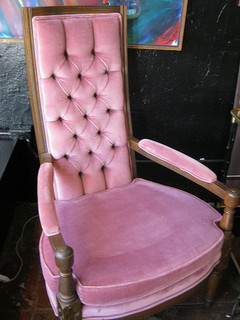
Before the Torah reading began, Chinese Jews removed the Torah from the Ahron Kodesh (Holy Ark) and put it on a special seat called the chair of Moses. From there it was carried to the Bima for the Torah reading. A small gesture but an important one, for where would we be without Moses and the Torah given to him on Mt. Sinai?

This of course is the segue to Shavuot, a holiday also referred to as Zman Matan Torateinu -- the time we received the Torah. So here's my suggestion: This Shavuot, how about designating a special chair for Moses? We already learned about a North African custom of placing an Elijah Chair in the Sukkah. Why not give Moses his due credit? Even better, how about creating your own Moses chair? You don't need wood. It seems a simple large carton will do, and you, your students and your children can write messages to Moses on it. Even better, how about the 10 Commandments? Get your creative juices going and enjoy!


 Shabbat Shalom...and Chag Sameach!


Velvet Chair Photo Credit
Carton Chair Photo Credit

Sunday, January 27, 2013

Origins of the Purim Masquerade Custom


Have you ever wondered when the Purim masquerade custom began?

The honest truth is that it's embedded in the Book of Esther, but we'll get to that later. If we want to stick to global custom origins, the first recorded source of dressing up in costume on Purim is a 15th century German document discussing women wearing men's clothing, drunkenness and other related Purim issues.

Any other global connections? There is a school of thought connecting Purim masquerades with the Carnival of Venice which dates back to the 11th Century. By coincidence, the calendar date of this festival famous for superb leather, porcelain and glass Venetian masks is not all that far from Purim. Hmmm...many Jewish customs have been "borrowed" from Christian neighbors, so this sounds like a definite possibility.

Speculation aside, let's take a look at the Book of Esther -- a story chock full of disguises.

The most obvious example is Queen Esther herself, depicted in this mosaic. Hiding her Jewish identity by competing in and winning Achashverosh's beauty pageant was the biggest masquerade of all. Even the name Esther, possibly taken from the Persian name Ishtar, is part of the cover up. Esther's given Hebrew name? Hadassah -- as in the name of the women's organization.

The carnival of poses doesn't end with Esther. Let's take her husband, the mighty king Achashverosh. He wears the mask of a strong ruler when actually his advisors -- most notably Haman -- rule him. Mordechai hides behind the mask of a loving uncle when he really is a mastermind pulling strings in order to save the Jewish people.

Haman? Is he as smart as he presents himself to be? Indeed, the story of Purim is one big charade. Speaking of which, maybe a good old fashioned game of charades should be part of this year's Purim curricula or family Purim feast? Not only does it enhance the masquerade custom, it sets the stage for it.

What do you think?


Mask photo credit

Queen Esther mosaic photo credit

Sunday, November 25, 2012

This Hanukkah, Create Your Own Olive Oil Custom

Customs are not written in stone. They evolve. Over the past two years I've covered numerous Hanukkah customs from Jewish communities around the world: Hanukkah pinatas from Mexico, the Hassidic custom of the rebbe playing his violin on Hanukkah,  the origins of Hanukkah Gelt and more.
Now I've decided it's time to develop a new custom -- home-made olive oil for lighting the Hannukiah. I've even found a Youtube video created by ChallahCrumbs to help you get started.

Why olive oil? because it's a great way to connect kids with the Bible, Israel, and of course Hanukkah. For starters, how about the olive leaf that the dove brought back to Noah signaling that the flood had abated? The olive branch was the world's first peace offering.

Next: olives are one of the seven species.
Hmm...that could spark a whole discussion on agriculture in Israel past and present, plus serve as a segue to environmental protection. Then we have the uses of olives and olive oil in Biblical times: as a sacrifice, a cooking condiment, a medical ointment, a way for anointing priests and kings, and of course a means for creating light.  Which of course leads us to the Hanukkah miracle.

Sound oil right to you?


Olive oil photo credit 
Olives photo credit

Tuesday, October 2, 2012

Afghan Jews Make Choice, Juicy Fruits Part Of Their Hakafot Ceremony

Yes, you've dipped apple slices in honey on Rosh Hashanah. Yes, you've decorated your Sukkah with hanging fruits. But fruits as part of the Hakafot on Simhat Torah? Ask Jews of Afghani descent and they'll tell you exactly what to do.

Go to the market the day before Simchat Torah and buy the choicest fruits you can find. Wrap them in silver or gold foil, so that they resemble sweet candies. Place the wrapped fruits around Elijah's chair.

Elijah's Chair? That's right. The same chair normally associated with a Brit Milah is the Afghani focal point for the seven Hakafot. A single Torah scroll is placed on the chair and the Hakafot are performed around it. And the fruit? They are considered "privileged" to be part of the Hakafot. In fact, so special that at the end of Simhat Torah they are auctioned off for considerable sums.

Hmm...that's a new slant on fundraising. Is there a way it can be translated into a classroom setting? I think so. Just like you have a model Seder before Passover, hold model Hakafot using luscious, wrapped fruits for accessories. Have enough for a mid-morning or mid-day snack. Connect each piece of fruit with an act of Tzedakah, and "auction" it off so that the student "winning" the piece of fruit promises to perform the good deed and report about it in class.

Two for the price of one -- Simhat Torah and Jewish values. A lesson plan that truly bears fruit.

Chag Sameach.


Photo Credit 

Sunday, September 23, 2012

Green Sukkah, Iraqi Style

Dried vegetation for building a sukkah? It certainly looks like the raw material used for creating this part of a Sukkah entitled Fractured Bubble -- one of the winning entries at New York's 2010 Sukkah City (click on the link to see the entire Sukkah).
My question is -- did the creator of this installation have Iraqi roots (pun intended)? I ask because during my recent research on Sukkot customs I found a photo of a Sukkah in Shanghai, China, circa 1930, built by the president of the Baghdadi community. Following the custom of Jewish community leaders in Baghdad, this Sukkah was made from branches of local vegetation -- not just the sechach (roof covering), but all four walls.

I have no idea if they used fresh or dried vegetation, but let's assume it was the latter and connect it with today's environmental mantra of reduce, reuse and recycle. Using dried up vegetation is a wonderful way to create a green sukkah. Agreed, it may be A LOT of hard work, so here's my suggestion. This year make a miniature prototype. If you live in a house, check out your hedges and backyard greenery. Instead of throwing weeds, dried up leaves and branches away, connect them green lego style. Live in an apartment? How about taking a trip to your local florist and ask what they do with unsold, wilted flowers. Those stems can be easily recycled. Other ideas? I think I'm going to let you take it from here. Think green and out of the box. I'm sure you and your children/students will come up with more innovative sukkah building ideas.


Wednesday, September 19, 2012

Connecting Kol Nidre with Bullying


Finding a unique Yom Kippur custom is not easy. Even though I haven't found one that will knock your socks off, that very (literal) image got me thinking. About bullying. Is there a connection between bullying and Yom Kippur?  I think we can create a link by examining the introductory lines framing the Kol Nidre prayer chanted on Yom Kippur eve.  Translated into English, the Cantor -- or whoever is leading the prayers -- says: "By the authority of the Court on High and by authority of the Court down here, by the permission of One Who Is Everywhere and by the permission of this Congregation, we hold it lawful to pray with sinners."

In other words, listen up bullies: despite your actions we are still open to accepting you in our midst. How? Perhaps by showing bullies that Rosh Hashanah-Yom Kippur is a time to examine one's deeds and understand what motivates one's behavior. Once they do that, hopefully they will stop the taunting and be ready to sit by our side on Kol Nidre.

On a personal note, these introductory words were penned by one of my husband's ancestors -- Rabbi Meir of Rothenburg -- in the late 13th century. A century and a half later they were endorsed by the Maharal of Prague (the creator of the Golem). Clearly, these two great Jewish leaders understood that even people who have wronged others are allowed a second chance.

Gmar Hatima Tova.


Sign credit

Sunday, September 2, 2012

Lithuanian Jews Combine a Rosh Hashanah Custom with a Hebrew Lesson

Who hasn't heard of the carrot and stick approach for learning or eating sweet carrot tzimmes for Rosh Hashanah? But eating plain carrots on Rosh Hashanah because of its Hebrew term? Yup that's the creative approach of Lithuanian Jews. They eat sliced carrots because the Hebrew word for carrot is gezer and on Rosh Hashanah we pray for good gezerot -- decrees.

I bet you're saying that's a stretch. Still, this out-of-the-box custom got me thinking. Maybe they're on to something. Maybe this is a good way of getting kids to enjoy their Hebrew lessons.

Here's the next Rosh Hashanah veggie connection that I thought of.

Explain the Tashlich custom by offering your children and students celery sticks. Selek is the Hebrew term for celery and our aim at Tashlich is to le'salek -- throw away our sins.

Food for thought? Let's face it, in the crunch our aim is to make our Jewish heritage palatable and fun.


Carrot photo credit

Celery photo credit