
I have been fascinated by Iranian Jewry for over eight years -- from the moment I discovered Esther and Mordechai's mausoleum while surfing the net. It is located in the Iranian city of Hamadan, also famous for its Persian carpets. The minute I landed on this Jewish tourist site I began to look at Purim in a purely Persian light. No longer did it seem a mythical tale meant for a carnival celebration. So serious is this holiday that most Jews living in Iran -- secular and religious alike -- observe the Fast of Esther. Nothing is closer to home for them than Purim, with Esther and Mordechai part of their persona.
You can imagine the culture shock Iranian Jews experienced after the 1979 revolution, when many sought safety in the United States and Purim rolled around. Little of what they witnessed was recognizable. Costumes? Certainly NOT a Persian custom. Same for Mardi Gras type merrymaking. Drowning out the name of Haman during the megillah reading through a cacophony of noise? Yes, but only one of their Haman traditions. While hanging effigies of Haman in backyards and burning them was no longer widespread (I assume for reasons of political correctness), some families wrote and sang their own songs about the insidious villain. Haman aside, giving children gifts and coins was a commonplace tradition, providing Purim with an atmosphere we associate with Hanukkah. Finally, Mishloach Manot came in only one form, and it wasn't a basket full of goodies. Homemade halva (much like these Israeli varieties) presented on a plate was the Persian preference, and the most widespread symbol of Purim.
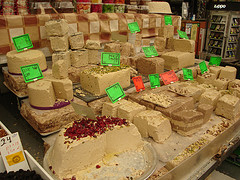 |
Today, Iranian Jews have successfully assimilated into the American way of life, leaving "the old country" and much of its ways behind. Last year I met a group of American-Iranian Jewish teens studying in Israel. Sadly, they barely knew about these traditions. How unfortunate in this multi-cultural age.
Hopefully this post will help bring Persia back into Purim. To make it even more authentic, take your students and children on this virtual tour of Esther and Mordechai's mausoleum. Like Jerusalem's Western Wall, it was the place Iranian Jews went to pray, cry and make special requests.
Enjoy your Persian Purim. Make it meaningful and merry at the same time.
Tile photo credit
Halva photo credit


