Sunday, March 23, 2014

Cochin Jews Put a Plague, or 10, on Pharaoh's House

Here's a DIY 10 Plagues seder project that you can adapt from a custom practiced by the Jews of Cochin, India.

In addition to placing Elijah's cup in the center of the Seder table, Cochin Jews place a Pharaoh's Cup filled with wine near the leader of the seder. Comes the section in the Hagaddah dealing with the Ten Plagues, this cup gets prime time exposure. As he calls out the name of every plague the seder leader dips his finger in Pharaoh's cup then drops the wine in a special plate. When he finishes saying all the plagues, he washes his hands.

Now for the DIY in this age of ready-made seder gimmicks.

Sketch a picture of Pharaoh. Older children can do it on their own. Younger children will have fun using the sketch as a coloring page.

That's right, add color. Ancient Egyptians liked color and makeup. Turn Pharaoh into a colorful character -- one that looks like this


Make sure the images can be taped to the front of a juice glass. Make as many as you like -- only one for the seder leader, or a Pharaoh cup for each participant and watch Pharaoh and his kingdom "drop out".


Pharaoh sketch credit
Colorful Pharaoh photo credit

Sunday, March 16, 2014

A Tunisian Passover Custom Ties in with This Year's Oscars

Two hundred+ years a slave(s). That's how long it took the Children of Israel to be free of their bondage.

To remember this fact, Tunisian Jews refined the Moroccan custom of holding the Seder plate on top of each person's head. Instead, they touch the head of each person with the seder plate in order to remind him/her of the unimaginable oppression and hardship slavery entails.

How does this custom tie in with this year's Oscar winner 12 Years A Slave? During the American Civil War a song was composed in 1862 called "Oh! Let My People Go." Its purpose was to serve as the anthem for Contraband -- escaped slaves who joined the Union army. At the same time church and church services served as a center for hope and solace for the slaves, who often used Gospel songs as a means of expression. The Biblical story revolving around the enslavement of the Children of Israel, and their savior Moses helped provide a feeling of faith and trust in the future. As a result "Oh! Let My People Go" evolved into one of the most popular Spirituals sung by the slaves. It's name was changed to "Go Down Moses" and it is still widely sung today by Gospel choirs.

So here's an idea for reprocessing the Tunisian custom. As the leader of the Seder touches the head of each person with the Seder plate, how about everyone singing the first stanza of "Go Down Moses."

  1. When Israel was in Egypt’s land,
    Let My people go!
    Oppressed so hard they could not stand,
    Let My people go!
    • Refrain:
      Go down, Moses,
      Way down in Egypt’s land;
      Tell old Pharaoh
      To let My people go!


Photo Credit


Sunday, March 9, 2014

Hungarian Jews Hold a Purim Feast that Resembles the American Thanksgiving Meal


Remember the jokes we make at Thanksgiving about why we eat turkey? The typical answer is because we are giving thanks to god, which in Hebrew is 'הודו לה and the word הודו also means turkey.

It seems that for Purim, Hungarian Jews have the same sense of humor. At their Seudat Purim -- the Purim Feast -- they too serve turkey for the main course.  Why? Because Ahasuerus ruled from הודו עד כוש -- which means from India to Ethiopia.

You've got it.  The Hebrew word for India is הודו. And yes, American Indians play a major role in the Thanksgiving holiday but I'm not going there. This is a different India, part of a vast kingdom. Do you know that Ahasuerus ruled over 127 provinces?! Who was King Ahasuerus? The Talmud and the Biblical commentator Rashi have different takes on this question.

Here's another question for you to explore. Feasting plays a major role in the Book of Esther.  How many feasts were held and how long was each one?

Can you think of your own twist for a Purim feast custom? While pondering the answer to this question have a look at these Purim Feast menus.

חג שמח


Turkey image credit

Sunday, February 23, 2014

A Bukharan Purim Custom for the Wintry Weather

Like you, I'm hoping that the extreme weather in the United States will make a turn around, but just in case you experience another snow storm, think about adopting this Bukharan Purim custom

Bukhara is the perfect combination of exotica and history. Located on the ancient Silk Road, this Central Asian city and surrounding region was once home to a vibrant Jewish community.

In fact, this is not the first time I've taken you to Bukhara. Last year I introduced you to the Bukharan Jewish custom of a Passover Seder overture. Sure enough, now I've discovered that this colorful community had a creative Purim twist as well.

There is always snow on the ground in Bukhara when Purim rolls around. While very few Jews remain in Bukhara and its surrounding areas, when this vibrant community was at its peak, they made the most of the snow by sculpting snowHamans like the one in this picture.

I know you're sick of the snow, but just in case you get another dumping, now you can creatively put it to use.  I've found 10 snow sculpting tips you might want to follow. If you want to go all the way, think about this: carve Haman's name into his torso, light a candle or two right next to him, watch him melt away and presto! You have a Purim variation of the Wicked Witch of the West.


Snow-Haman Photo Credit

Sunday, February 9, 2014

A Different Purim Twist from Morocco: Haman's Eyes

Haman must have been a funny looking fellow. Ears that looked like triangles, and (now I've discovered) -- eye sockets that looked like unshelled hard boiled eggs.

You guessed it. Two hard boiled eggs in their shells are the key for baking a Moroccan Purim bread called Haman's Eyes. It can be a bread adorned with almonds, like the one in this picture, used as part of the Mishloach Manot.

Or...it could resemble this!


A fun class or home activity? You bet. Just follow this recipe and give that devil everything he deserves!


Photo credit
Haman's Eyes Photo Credit

Sunday, January 19, 2014

What Are You Doing for Rosh Chodesh Adar?


Are you leaping for joy because this year is a leap year on the Jewish calendar? Have you thought about the fact that one week from this coming Friday you can start singing the Doublemint chewing gum song Double Your Pleasure, Double Your Fun...?

Yup. This year we've got the twin Adar months of Adar Aleph and Adar Bet. Since Adar is the happiest month on the Jewish calendar, that means we can double our fun. And since Purim is celebrated during Adar Bet, we have an expanded heads up for planning this joyous celebration.

But first, what do you have planned for Rosh Chodesh Adar Aleph? Don't forget, it's the prelude to your Purim festivities.

Have you thought about a combined Rosh Chodesh-Shabbat feast?
Hmmm...let's play with this idea. Originally Rosh Chodesh was an important monthly holiday. The shofar was blown, followed by family festivities -- meaning yummy food. On Shabbat we welcome the Sabbath Queen with a sumptuous meal. So, a mini Friday/Shabbat-Rosh Chodesh banquet sounds like a natural. Here are some kosher kid-friendly recipe ideas.

Next, let's welcome Rosh Chodesh Adar with a little fanfare. Blow the shofar please.

This is beginning to sound like a royal procession -- which ties in as well since Rosh Chodesh Adar falls on Friday, and on Friday nights we welcome the Sabbath Queen. Before a royal monarch enters a banquet hall trumpets are blown and a royal flag parade precedes the monarch. A flag for this year's Sabbath Rosh Chodesh Adar Queen? With a coat of arms? Have a look at this. Not only will it get you in a Rosh Chodesh Adar celebration mode, but it will also get you thinking about Purim.

All of this is just for starters. The rest is up to you. Remember: It's your Purim rehearsal and the beginning of two joyful, happy, fun months.


Rosh Chodesh Graphic Credit
Shofar Blowing Photo Credit

Sunday, January 5, 2014

Create a Personal Connection to Tu B'Shvat

Here's a question for you -- can you create a personal connection to Tu B'Shvat? Something that centers around trees? Perhaps you (and your students) are working on family trees? Even better, there's a surname in your family rooted to the word tree. For instance the last name Baum is a German Jewish name that literally means tree. Similarly, the name Nusbaum stands for nut tree and Baumgarten means a tree garden.

Why this question? It evolved from the fact that this year Tu B'Shvat has added meaning for me. With the recent birth and naming of our second grandchild I commented to my husband that "we now have two trees!"

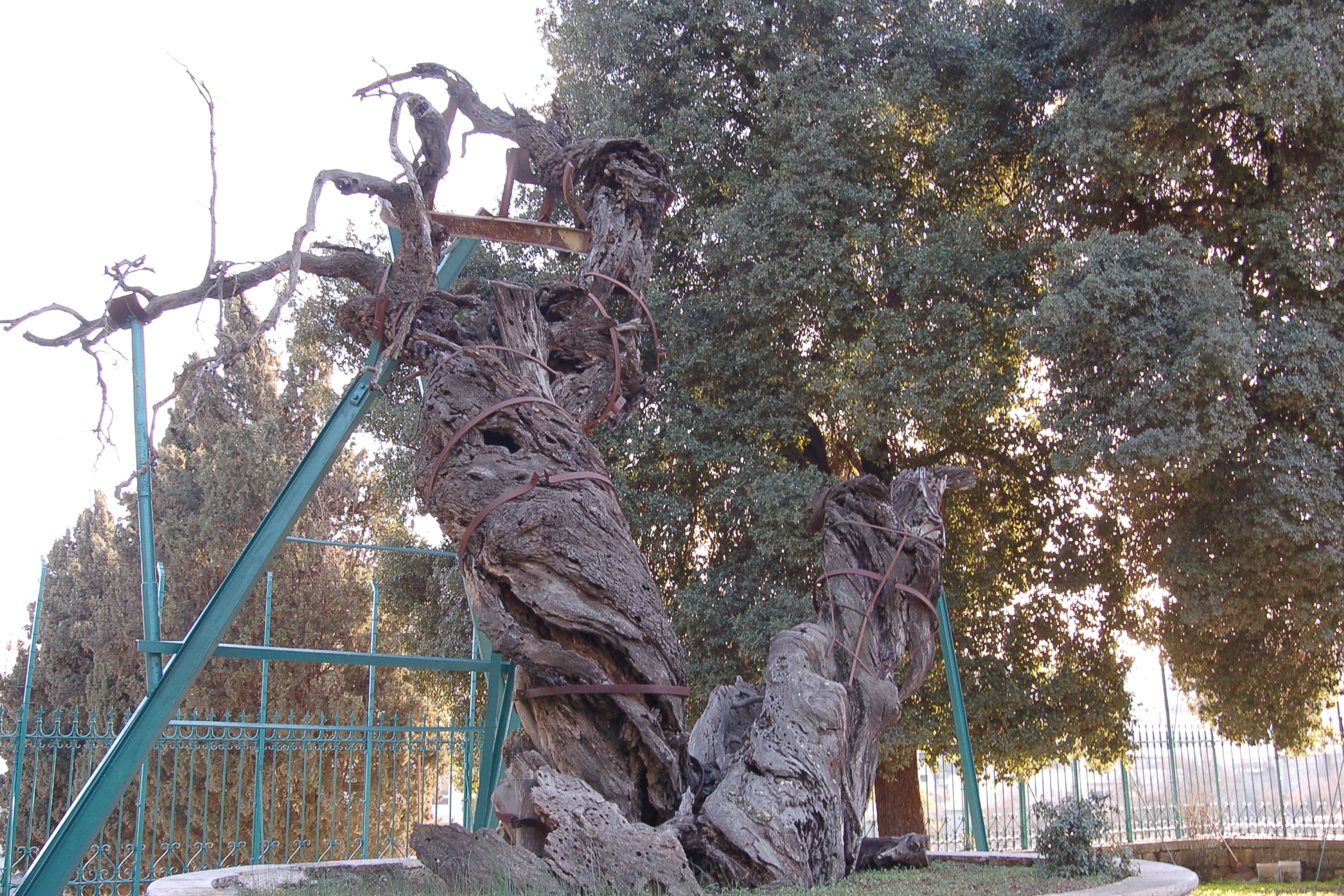
Our grandson Alon is named for the mighty oak tree rooted to many stories in the Bible -- starting with a tree named the Oak of Abraham, where legend has it Abraham hosted the three angels. The saga continues today, with the trunk of that strong, impressive tree still standing -- with some help.


Four weeks ago our granddaughter Elah made her entrance into the world. The name Elah is associated with oak, pistachio and terebinth trees. Sounds like a multiple choice test, but this tree 
has a formidable presence as well. After all, the Valley of Elah -- where David fought Goliath -- is named after it. 

While I'm writing this post I'm smiling to myself. Our two grandchildren's names unintentionally continue a family tradition of naming progeny after Biblical trees. It began with my parents naming me Tamar -- the palm tree under which Deborah sat when she carried out her duties as a judge, and the same tree providing us with palm leaves for Sukkot. 

Am I barking up the right tree with my original question -- can you create a personal connection to Tu B'Shvat? There may be a new Tu B'Shvat custom that you can create around it.